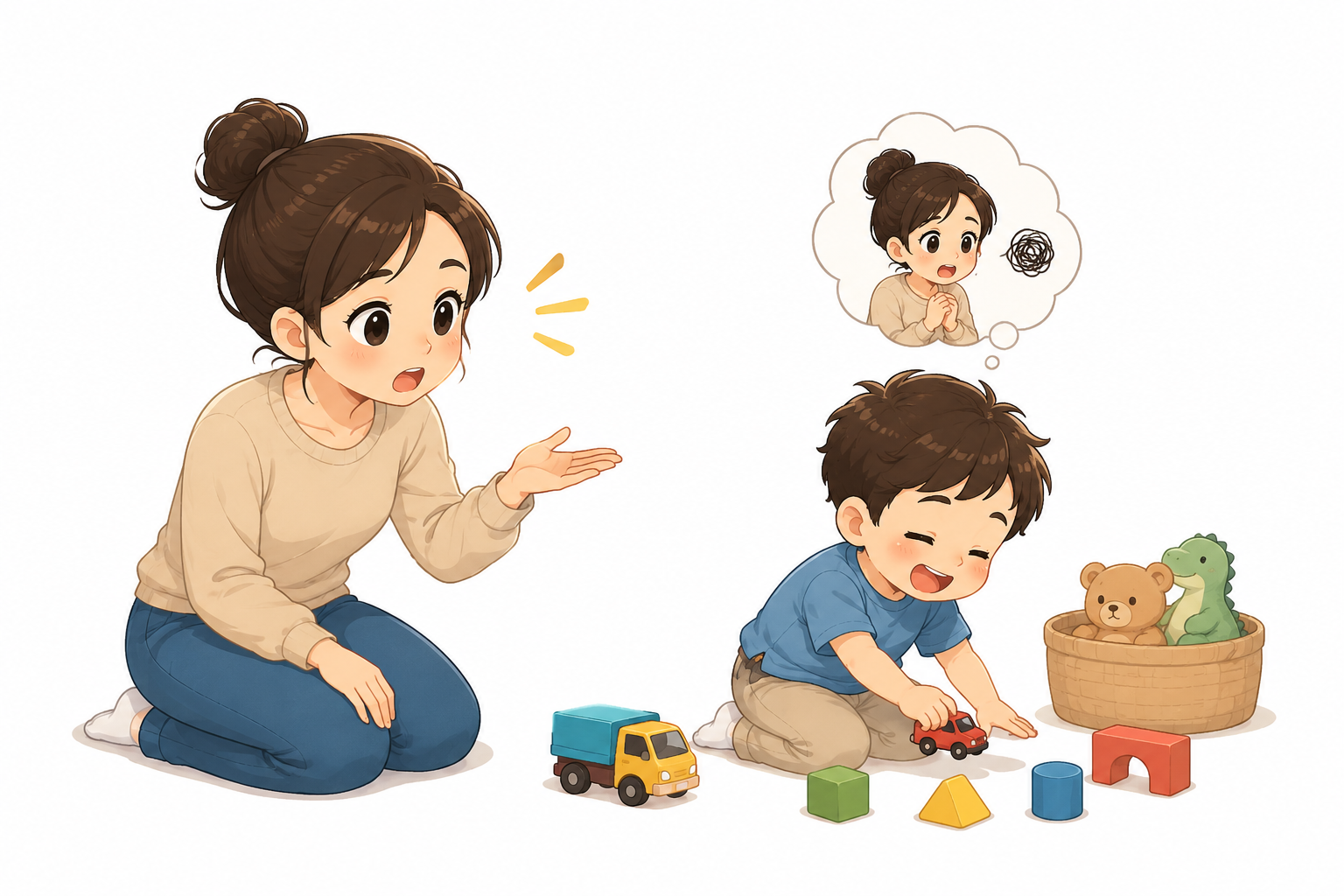
Many parents wonder why their toddler seems to ignore simple requests like, "Put your shoes on," or "Please pick up your toys." It's easy to assume children are being , but in many cases, that's not what's happening. Listening is a skill that depends on attention, impulse control, language processing, and emotional regulation; all abilities that are still developing during the toddler years.
Young children are often completely focused on what they're doing. Switching attention from play to an adult's request takes time because their brains are still learning how to pause, process information, and respond. Instead of repeating the same instruction louder and louder, it often helps to move closer, make eye contact, gently get their attention, and give one clear, simple direction. A brief pause after speaking also gives children time to process what they've heard.
This doesn't mean children should never follow directions. Consistent expectations and calm boundaries are still important. But understanding that listening is a developmental skill, not an instant ability, can change the way parents respond. Over time, patient guidance, predictable routines, and clear communication help children become better listeners without turning every request into a power struggle.
Children aren't born knowing how to listen well. Like every other skill, listening develops with practice, guidance, and time.