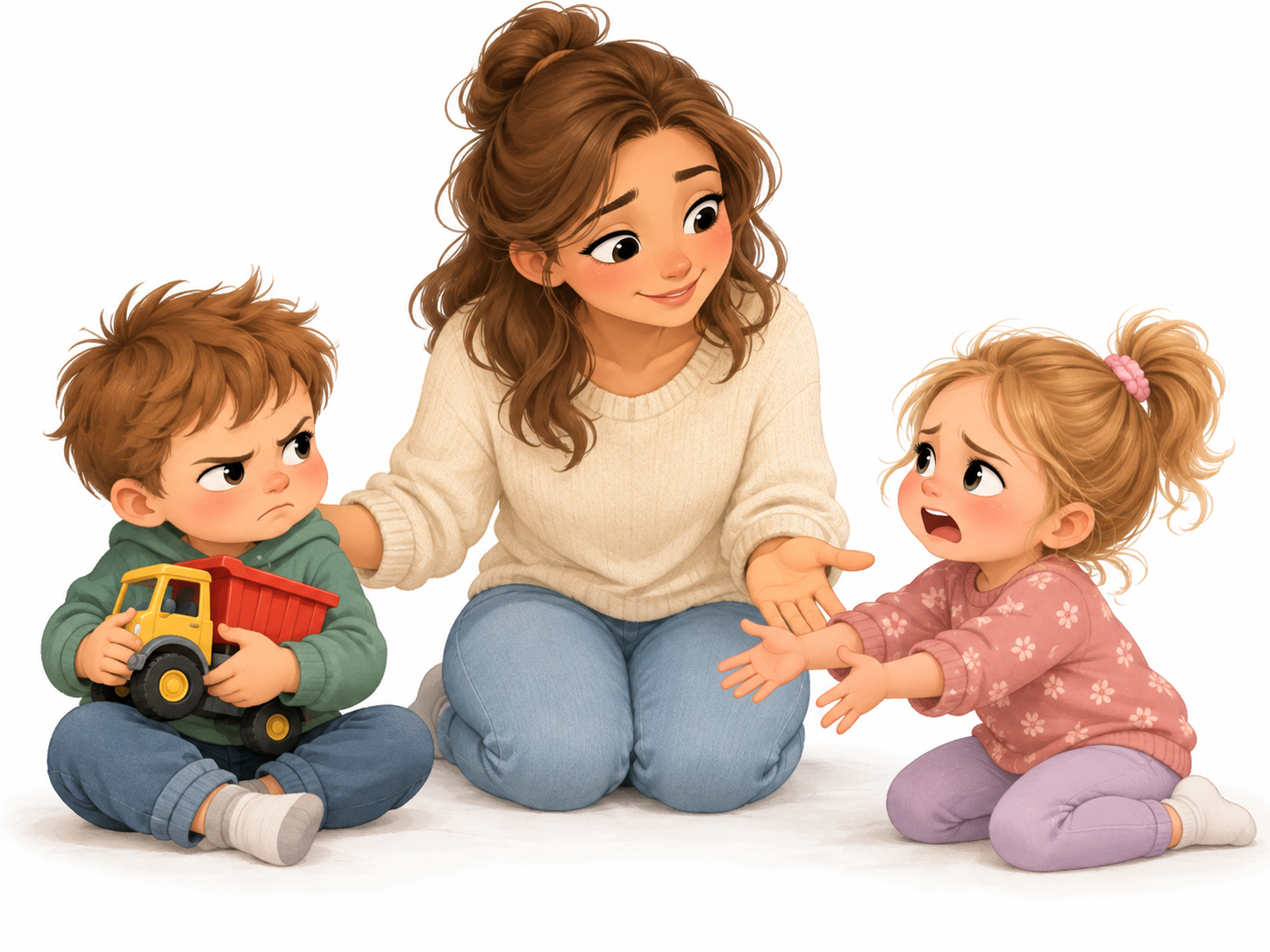
One minute they’re building together. The next, someone grabs a toy, someone screams, and suddenly a parent is standing in the middle trying to figure out who started it.
Sibling conflict can be exhausting, especially when the same arguments seem to happen every day. But disagreement between siblings is not automatically a sign that something is wrong with their relationship. Siblings are often learning some of their earliest lessons about taking turns, negotiating, protecting personal space, handling disappointment, and repairing conflict.
The goal, then, isn’t to eliminate every disagreement. It’s to know when children need an adult to step in; and when a small conflict can become an opportunity to practice solving a problem.
Not every disagreement needs a referee
When children argue, adults often jump in immediately:
“Give it back.”
“You had it first.”
“Let your sister have a turn.”
Sometimes intervention is necessary. But if every disagreement is solved by an adult, children get fewer opportunities to practice negotiating for themselves.
If everyone is physically safe and the conflict is still manageable, pause for a moment.
You might say:
“You both want the same toy. What could we do?”
or:
“I hear two different ideas. Can you find a plan that works for both of you?”
Young children may still need help generating solutions. The difference is that the parent is coaching the problem-solving process instead of simply announcing the winner.
Step in when safety or power becomes an issue
There are situations where waiting is not appropriate.
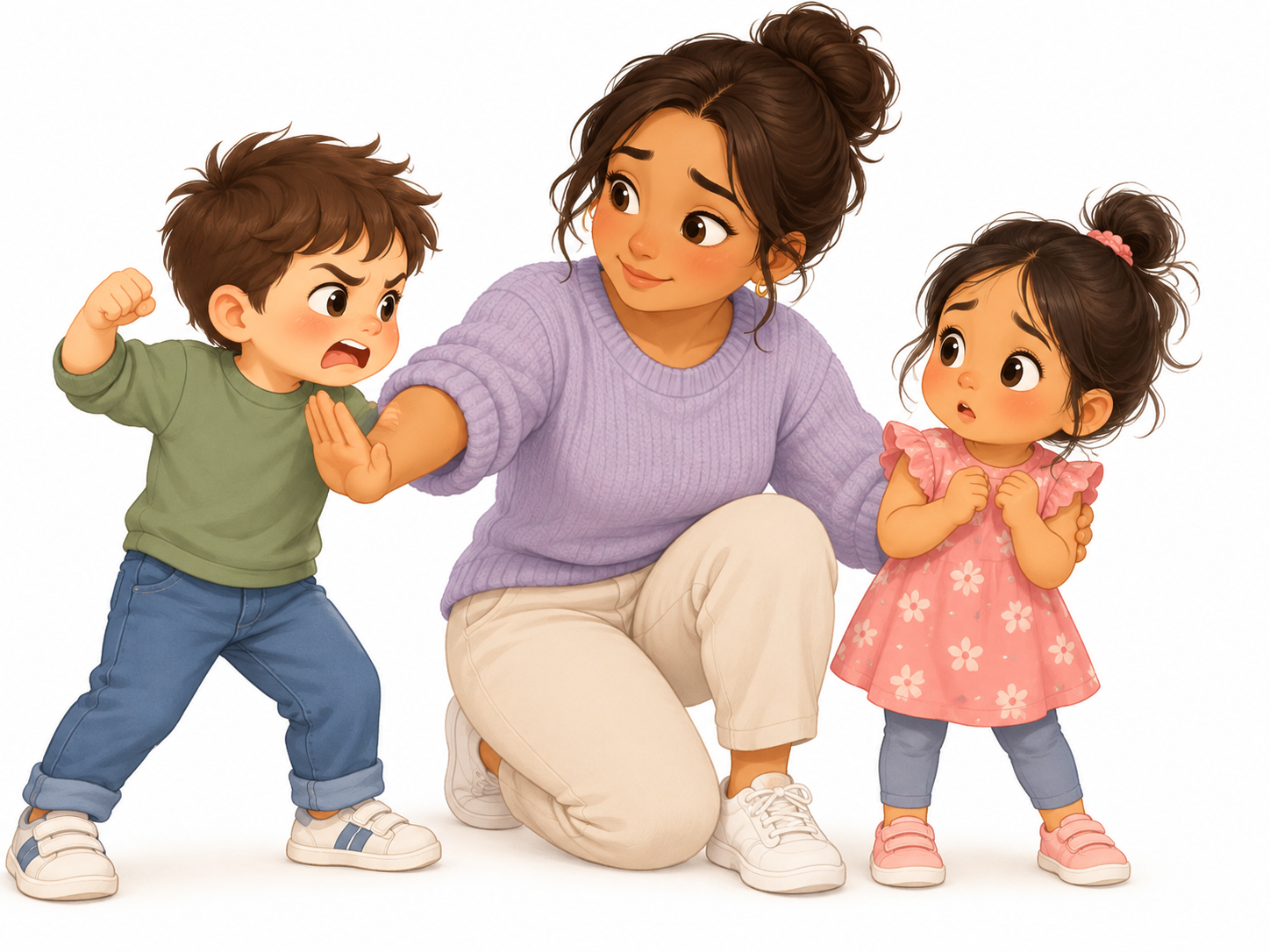
If hitting, biting, kicking, threatening, or repeated intimidation begins, the adult should intervene. The same applies when one child is consistently overpowering another or when a younger child simply does not have the skills to protect themselves.
Sibling conflict and sibling aggression are not exactly the same thing. Occasional disagreements are common; repeated bullying, fear, or physical harm should not be dismissed as “just siblings being siblings.”
In those moments, keep the boundary simple:
“I won’t let you hit.”
“You can be angry. You cannot hurt her.”
Separate the children if necessary, help everyone calm down, and save the longer conversation for later.
Stop trying to find out who started everything
When two children are upset, parents can easily become detectives:
“Who took it first?”
“What did he do before you pushed him?”
“Tell me exactly what happened.”
Sometimes the sequence matters. But many sibling fights are less about finding one guilty child and more about helping both children handle the problem differently next time.
Try describing what you see:
“You both wanted the truck, and now you’re both upset.”
Then move toward the solution:
“The truck can’t be pulled between two people. How should we handle turns?”
This shifts the focus from blame to problem-solving.
Fair doesn’t always mean exactly equal
Sibling rivalry often becomes louder when children compare what they receive:
“She got more.”
“He got to go first.”
“You always help the baby.”
Parents sometimes respond by trying to make everything perfectly equal. But children do not always need identical treatment; they need to understand that everyone’s needs matter.
One child may need help tying shoes while another can do it alone. A younger sibling may need an earlier bedtime. An older child may be allowed to use toys that are not safe for the younger one.
Instead of promising perfect equality, try:
“Fair means everyone gets what they need. It doesn’t always look exactly the same.”
Being clear about family rules and predictable turn-taking can also reduce repeated conflicts around limited resources.
Don’t force sharing every time
Sharing is an important social skill, but forcing a child to immediately hand over something they are actively using does not necessarily teach generosity.
For many situations, turn-taking is easier for young children to understand.
“She’s using the truck right now. You can have a turn when she’s finished.”
If waiting is difficult, use a timer or help the waiting child choose something else.
Children can also have a few special belongings that do not have to be shared. Knowing that some possessions are protected can actually make sharing other toys feel safer.
Notice cooperation; not only conflict
Sibling behavior tends to get adult attention when something goes wrong.
But consider what happens when they play peacefully for 20 minutes: adults often use that opportunity to finally get something done.
Then a fight starts; and suddenly everyone has the parent’s full attention.
That doesn’t mean children are deliberately planning fights for attention. But it does mean cooperative moments are easy to overlook.
Catch those moments:
“You helped her find that piece.”
“I noticed you worked out whose turn it was.”
“You two built that together.”
Positive attention for cooperation can help reinforce the behaviors parents want to see more often.
Teach conflict skills outside the conflict
The middle of a screaming match is rarely the best time to teach negotiation.
Practice when everyone is calm.
Children can learn phrases like:
“I’m still using it.”
“Can I have a turn when you’re done?”
“Please stop.”
“I need space.”
“Can you help me?”
Role-playing these situations with toys or stuffed animals can make the language easier to access later when emotions are stronger.
And remember: these skills take repetition. A child may know exactly what to say during practice and still shove their sibling tomorrow. Knowing a skill and being able to use it while angry are not the same thing.
Siblings don’t need to agree all the time
A close sibling relationship is not one without conflict.
Children can love each other deeply and still argue over toys, personal space, attention, and whose turn it is to press the elevator button.
Parents do not have to solve every disagreement for them. The bigger goal is to gradually teach children how to disagree without hurting each other, how to ask for help when they need it, and how to reconnect after things go wrong.
Sibling conflict is not just something to stop; it can also become a place where children learn some of their earliest relationship skills.