
Halloween can feel magical to adults, but for a toddler or preschooler it can also be a lot to process at once.
There are unfamiliar costumes, flashing decorations, loud doorbells, dark streets, crowded sidewalks, strangers approaching, changes in routine, and plenty of excitement. A child can be thrilled about Halloween in the morning and completely overwhelmed by the evening.
That does not necessarily mean they dislike Halloween. Sometimes their developing brain and body have simply reached their limit.
Costumes can feel more real than adults expect
Young children are still developing the ability to separate fantasy from reality consistently.
They may understand that a monster is “pretend” when talking about it during the day, then become genuinely frightened when a large masked figure walks toward them in the dark.
Masks can be especially confusing because they hide facial expressions. Children normally use faces to help decide whether another person is friendly, playful, upset, or safe. When those familiar cues disappear, something that seems funny to an adult may feel unpredictable to a young child.
Instead of saying, “It’s not scary, it’s just pretend,” try:
“That costume looks scary to you. We can stay back and look from here.”
Reassurance works better when the feeling is acknowledged first.
Too much fun can still be overwhelming
Halloween often combines several types of stimulation at once.
Bright lights, music, crowds, costumes, sugar, staying up later than usual, and constantly moving from house to house can all add to the load.
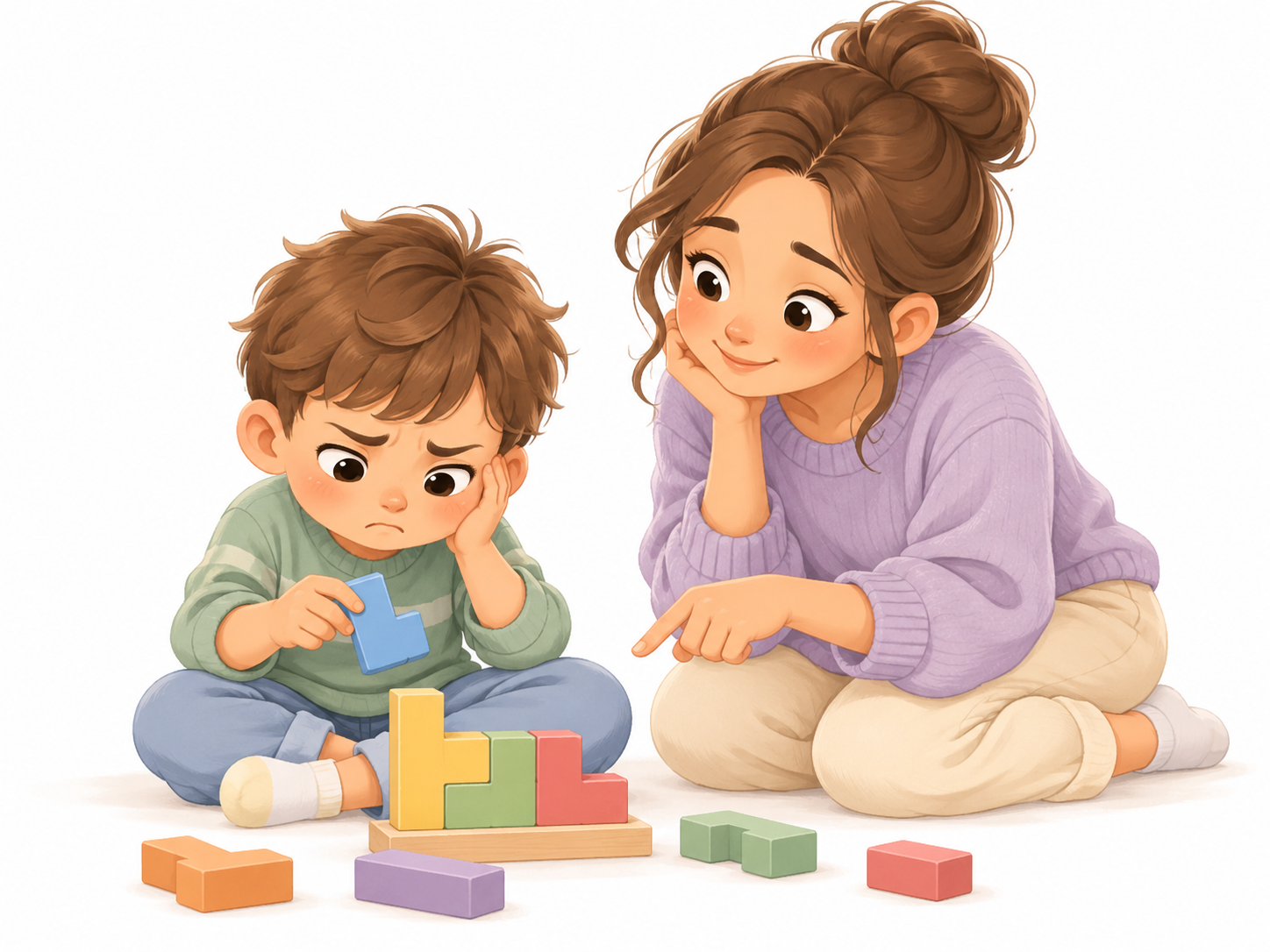
A child who suddenly becomes clingy, tearful, wild, demanding, or refuses to continue may not be “ruining Halloween.” They may simply need less input.
A short break, some water, a familiar snack, sitting in the stroller, going somewhere quieter, or heading home earlier than planned can help.
The goal does not need to be visiting every house on the street.
Let children choose how much they participate
Not every child wants to wear a costume.
Some dislike hats, masks, face paint, itchy fabrics, or unfamiliar clothing. Forcing a costume because “everyone else is wearing one” can turn the evening into a struggle before it even begins.
Letting a child try the costume at home first can help. So can choosing comfortable clothing underneath it or allowing them to remove parts of the costume when they have had enough.
Participation can also look different from child to child.
One child may happily knock on doors. Another may prefer to watch from the sidewalk. A younger child may enjoy handing out candy at home more than trick-or-treating.
All of those still count as Halloween.
Candy does not need to become a battle
Halloween candy can create anxiety for parents too.
Trying to tightly control every piece can sometimes make candy feel even more exciting. Instead, parents can keep the boundary simple and predictable.
For example:
“You can choose a few pieces tonight, and we’ll save the rest for later.”
Candy can be offered alongside regular meals and snacks over the following days rather than becoming something children need to earn.
And despite the common Halloween stereotype, sugar itself has not consistently been shown to make most children hyperactive. The late bedtime, excitement, crowds, novelty, and stimulation of Halloween may have much more to do with the wild energy parents see that night.
Protect some of the normal routine
Halloween does not need to follow a perfect bedtime schedule, but young children often cope better when at least parts of their familiar routine remain.
Dinner before trick-or-treating, familiar pajamas afterward, the usual bedtime book, or a calm wind-down when you get home can give the evening a predictable ending.
After a highly stimulating event, children often need help shifting back into calm.
That transition matters just as much as the celebration itself.
Halloween does not have to be perfect to be memorable
A young child does not need to visit twenty houses, wear the costume for three hours, smile for every photo, or happily approach every decoration.
A successful Halloween might be five houses, one piece of candy, a costume worn for twenty minutes, and then home for a bedtime story.
The goal is not to help children tolerate as much Halloween as possible. It is to give them enough safety and flexibility to enjoy the parts they are ready for.