Many parents feel responsible for keeping their children entertained all day. When a child says, "I'm bored," the first instinct is often to offer a new toy, turn on a screen, or suggest another activity. However, boredom isn't always something that needs to be fixed. In fact, it can be an important part of healthy development.
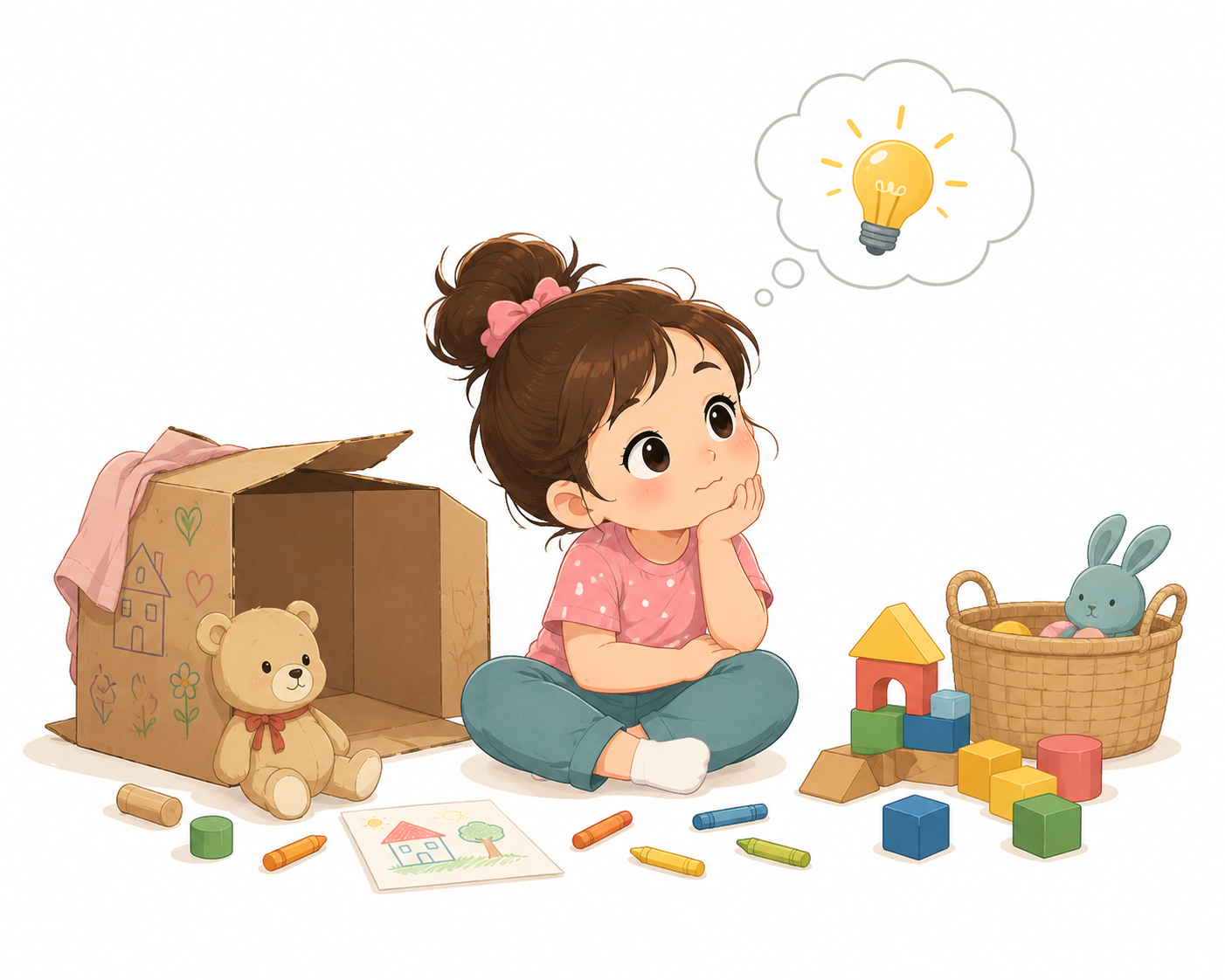
When children aren't constantly entertained, they begin looking for ways to create their own fun. A cardboard box becomes a spaceship, a blanket turns into a fort, and a few blocks become an entire city. These moments of unstructured play help strengthen creativity, problem-solving, imagination, and independent thinking. Learning to tolerate boredom also helps children develop patience and flexibility; skills that benefit them far beyond childhood.
This doesn't mean children should be left alone without support. Younger children may need gentle encouragement before they start playing independently. A simple response like, "I wonder what you could create with your blocks today," gives them a starting point without taking over the play. Sometimes, giving children a little space is exactly what allows their imagination to grow.
Children don't always need more activities. Sometimes, they simply need more opportunities to discover their own ideas.