Snacks are an important part of a young child’s day. Preschoolers have small stomachs, busy bodies, and may genuinely need something to eat between meals.
But when snacks are available almost constantly; crackers in the car, fruit while playing, another snack before dinner; children can slowly fall into a pattern of grazing all day and eating very little at actual meals.
That doesn’t mean snacks are the problem. Often, the issue is simply that the child never gets enough space between eating opportunities to recognize hunger.
Give snacks a beginning and an end
Instead of letting food follow the child around throughout the day, try creating fairly predictable times for meals and snacks.
That might sound like:
“We’re having a snack now. Dinner will be later.”
The schedule doesn’t need to be rigid or run by the clock. Children’s hunger varies from day to day. The goal is simply to create a rhythm where there are clear opportunities to eat; and periods in between when eating is finished.
This can help children arrive at meals hungry enough to be interested in food, without becoming overly hungry and overwhelmed.
Make snacks feel like mini meals
A snack doesn’t have to mean packaged “snack food.”
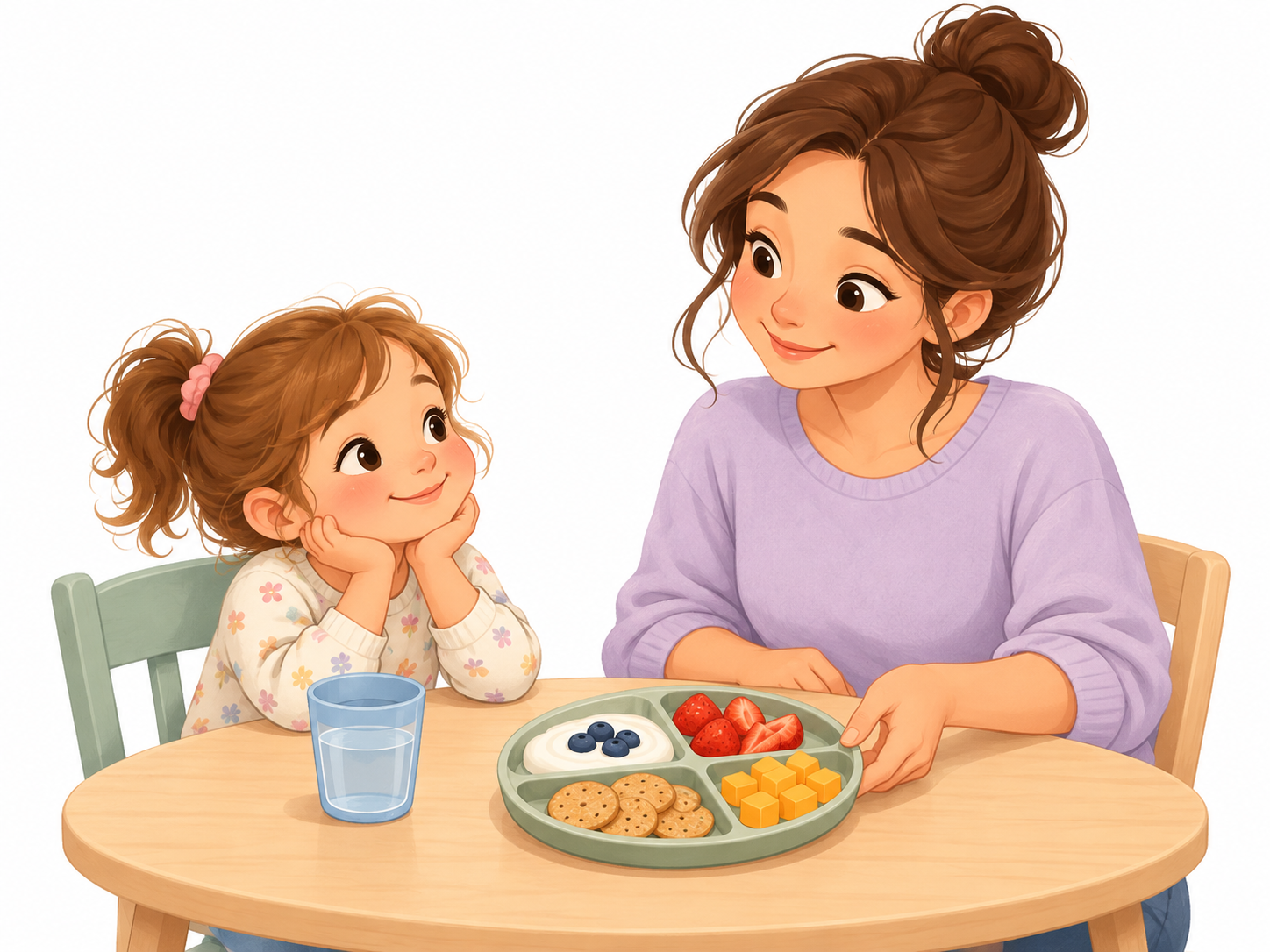
Combining two food groups can make it more satisfying:
- yogurt + fruit
- cheese + crackers
- toast + nut or seed butter, when safe and appropriate
- fruit + yogurt
- hummus + pita
- egg + toast
- vegetables + a familiar dip
The goal isn’t to create a perfect nutritional plate every time. It’s simply to offer something substantial enough that the child doesn’t need another snack 20 minutes later.
Be careful with the pre-dinner snack trap
Late afternoon is often the hardest part of the day.
A child comes home hungry, asks for crackers, finishes them, asks for more; and then sits at dinner saying, “I’m not hungry.”
Instead of trying to protect dinner by refusing food completely, offer a planned snack earlier or serve something small that you would also feel comfortable including with dinner.
For example, yogurt, fruit, cheese, vegetables, or part of the upcoming meal can bridge the gap without turning the hour before dinner into continuous grazing.
Water can be the default between eating times
Young children sometimes ask for snacks because they are bored, tired, thirsty, or simply used to eating while doing something else.
Parents do not need to decide whether every request represents “real hunger.” A predictable routine makes that job easier.
If snack time has just finished, you might simply say:
“Snack is all done. You can have some water now, and we’ll eat again at dinner.”
If the child seems unusually hungry, flexibility is always okay. A routine should support the child; not become a rule that ignores genuine hunger.
Keep pressure away from meals
A snack schedule should never become a strategy for making a child hungry enough to finally eat broccoli.
Parents can provide predictable opportunities and a variety of foods, but children still decide how much they eat.
If a child eats very little at dinner, avoid:
“You barely ate anything, so you can’t have your bedtime snack.”
or
“If you were really hungry, you would eat your dinner.”
Instead, keep the next eating opportunity predictable. This helps children learn that food is available regularly without needing to eat “just in case” or negotiate for something preferred.
The goal isn’t fewer snacks
Children often need snacks.
The goal is to give eating a predictable rhythm so children can experience both hunger and fullness, instead of spending the entire day somewhere in between.
A little structure around snacks can sometimes make family meals easier; without bargaining, restricting, or asking a child to take “just one more bite.”