
“Potty trained in three days.”
It sounds appealing; especially to a parent who is tired of diapers and ready to move on. Three-day potty training plans are everywhere online, often with detailed schedules, diaper-free weekends, frequent potty trips, and the promise that a focused few days can get the job done.
And for some children, a few intensive days really can create noticeable progress.
But there is an important difference between making progress in three days and mastering toileting in three days.
Using the toilet independently is not one single skill. A young child has to notice internal body signals, interrupt play, get to the bathroom, manage clothing, sit and release, wipe with help or independently depending on age, dress again, wash hands, and eventually do all of that in unfamiliar bathrooms too.
That learning process does not always fit neatly into a long weekend.
Three days can be a beginning; not a deadline
A focused period at home can sometimes be useful. Fewer distractions may give a child more opportunities to notice the connection between the sensation of needing to pee and what happens next.
The problem begins when three days becomes the standard a child is expected to meet.
If Monday arrives and accidents are still happening, parents may start wondering:
“Are we doing this wrong?”
“Is my child being stubborn?”
“Should we start over?”
Usually, learning is simply still happening.
A child may begin using the potty successfully at home while still forgetting during play. They may recognize pee before they recognize poop. They may willingly use their own potty but refuse a public toilet. Some children initiate independently quite quickly; others continue needing reminders for a while.
Those differences are not unusual.
Readiness matters more than the calendar
A method can provide structure, but it cannot create developmental readiness.
Before beginning, it helps to look for signs that the child is becoming aware of elimination and capable of participating in the process.
They may stay dry for longer periods, notice a wet or dirty diaper, pause or hide before a bowel movement, show curiosity about the bathroom, communicate basic needs, or begin helping with clothing.
None of these signs needs to be perfect.
But when several pieces are beginning to come together, potty learning usually requires less adult pressure.
Timing matters too. A child who is simultaneously starting preschool, moving homes, welcoming a sibling, traveling, or recovering from illness may have less capacity for another major transition.
There is no prize for starting on the earliest possible weekend.
Constant prompting can hide an important part of learning
Some intensive potty-training approaches involve placing a child on the potty very frequently.
That may prevent some accidents initially; but there is another skill children eventually need to develop:
recognizing their own body signals.
If an adult is always responsible for announcing potty time, a child may become very good at sitting when asked without becoming much better at noticing when they actually need to go.
Instead of asking every few minutes:
“Do you need to pee?”
parents can begin helping children notice what their bodies are doing:
“You suddenly stopped playing. I wonder if your body is telling you something.”
“You’re squeezing your legs together. That can sometimes mean pee is coming.”
The long-term goal is not simply getting pee into the potty. It is helping the child connect sensation → awareness → action.
Accidents don't erase progress
One of the biggest problems with a strict deadline is that accidents can begin to feel like failures.
But accidents provide information.
Maybe the child noticed too late. Maybe they were deeply involved in play. Maybe pulling down pants took too long. Maybe they were afraid of an unfamiliar toilet.
Responding calmly keeps the focus on learning:
“Pee came out before we reached the potty. Let’s get dry clothes.”
No shame. No disappointed face. No long conversation.
As awareness grows, adults can gently help the child notice what happened and what they might try next time.
Be careful with rewards, pressure, and “just sit”
When progress feels slow, adults naturally want to motivate the child.
That can quickly turn potty training into:
“Just sit for two minutes.”
“Try and you’ll get a treat.”
“You haven’t gone yet—you need to try again.”
Occasional encouragement is one thing. But if toileting turns into repeated negotiation, children may begin resisting the potty itself.
Some will hold urine. Others become anxious about bowel movements. Others discover that saying “no” to the potty is one area where they have complete control.
Adults can control the environment and routine.
They cannot make another person's body pee or poop.
That is why gentle potty learning works best when there is structure without turning elimination into a performance.
Daytime, poop, and nighttime don't always arrive together
Another expectation worth letting go of: potty training doesn't always happen as one complete package.
A child may be consistently dry during the day but still need support with bowel movements.
They may use the potty beautifully at home and have accidents at preschool.
And nighttime dryness often follows a different developmental timeline from daytime toilet learning.
Seeing these as separate pieces can make the process much less stressful than expecting one weekend to solve everything at once.
So, is a three-day approach wrong?
Not necessarily.
Clearing a few days, reducing distractions, removing diapers during awake periods, and giving a ready child plenty of opportunities to practice can be a useful starting phase.
What matters is the expectation attached to it.
Instead of:
“My child needs to be potty trained by day three.”
try:
“These three days are giving my child focused time to begin learning.”
That small shift changes the entire experience.
There is room for accidents.
There is room to slow down.
There is room for a child who understands on day two and a child who needs several weeks to put all the pieces together.
Potty training doesn't need to be a race
A fast method can sound reassuring because it gives parents something concrete: three days, a schedule, and a finish line.
But children don't learn according to a marketing timeline.
The more useful question isn't:
“How quickly can we finish potty training?”
It's:
“How can this child learn to understand their body and use the toilet with confidence?”
And that process may take three days to begin—but much longer to become truly independent.
Want a step-by-step plan without the three-day pressure?
The Gentle Potty Training Guide goes deeper into readiness, preparation, what to do before removing diapers, how to introduce the potty, body-awareness activities, accidents, resistance, regressions, and what to do when progress seems to stall.
→ Explore the Gentle Potty Training Guide
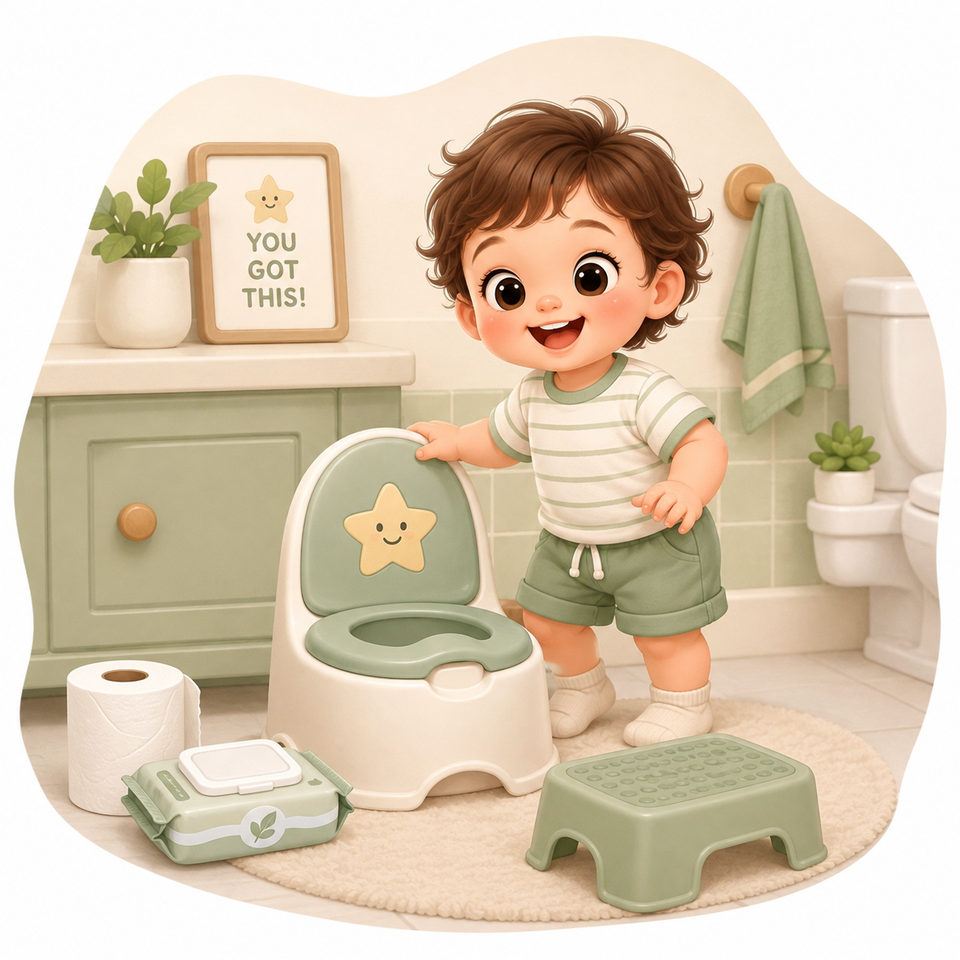
Preparing to start? You can also see the practical items that can make the process easier:
A child doesn't need to master potty training on a deadline. They need enough time, support, and practice to make the skill their own.