Potty training often gets described as something that begins the day diapers come off. But for many children, the most important part actually starts much earlier.
Learning to use the toilet involves more than bladder control. A young child has to notice what is happening inside their body, understand what the potty is for, communicate a need, pause an activity, manage clothing, sit long enough to try, and cope with accidents along the way. That is a lot of new learning happening at once.
This is why potty training often goes more smoothly when the focus begins with readiness, familiarity, and confidence; not a deadline.
Readiness is more than reaching a certain age
There is no single birthday when every child suddenly becomes ready for potty training.
Instead, parents can look for a combination of signs: staying dry for longer stretches, noticing or announcing a wet or dirty diaper, showing interest in the bathroom, hiding or pausing while having a bowel movement, attempting to pull clothing up and down, or beginning to communicate before or during elimination.
A child does not need to show every sign before starting. But the more awareness and participation they already have, the less potty training needs to feel like something being imposed on them.
It also helps to consider what else is happening in the child's life. Starting preschool, moving homes, welcoming a new sibling, traveling, illness, sleep disruption, or other major changes can make learning another big skill harder. Sometimes waiting a few weeks is not “falling behind.” It is choosing a better moment.
Build familiarity before expecting performance
The potty does not have to appear one morning with the announcement, “Today we’re done with diapers.”
Children can become familiar with toileting long before they are expected to use it independently.
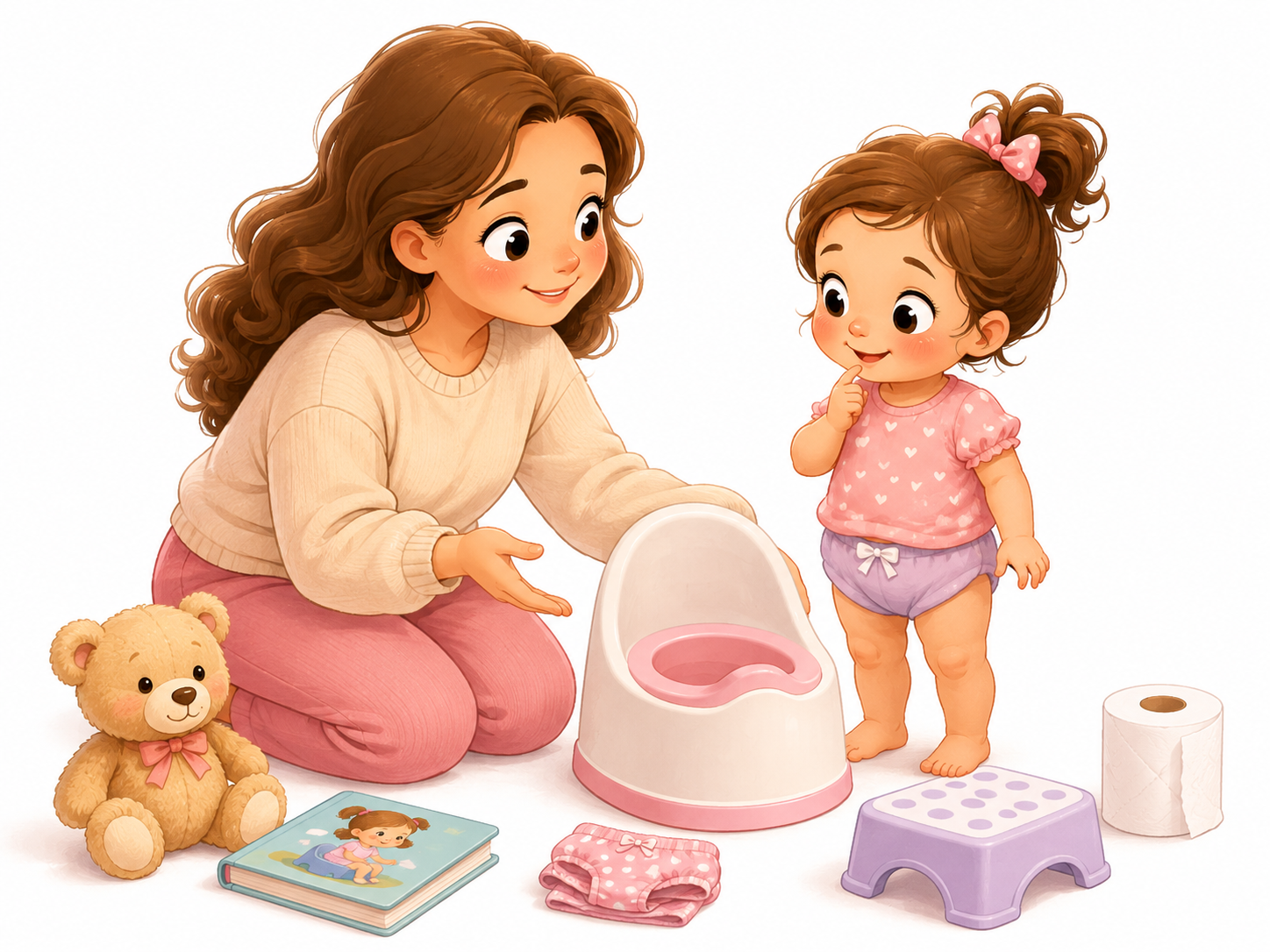
Let them see the potty. Name what it is for. Read simple potty books together. Use pretend play with a doll or stuffed animal. Talk naturally about body signals: “Your tummy is telling you something,” or “Your diaper is wet. Soon you’ll learn how your body tells you before the pee comes.”
These small conversations help turn toileting from a mysterious new demand into something familiar.
Pretend play can be especially helpful for children who are cautious about change. A teddy bear can “feel the pee coming,” walk to the potty, pull down its pretend pants, sit, flush, wash hands, and go back to playing. The child is learning the sequence without being the one under pressure.
Body awareness comes before independence
One of the most useful skills in potty training is helping a child begin to connect a physical sensation with what happens next.
Adults often notice the signs before the child does: suddenly becoming still, hiding behind furniture, grabbing their diaper, crossing their legs, or beginning a familiar “potty dance.”
Instead of immediately asking, “Do you need to go potty?” over and over, parents can gently describe what they notice:
“Your body looks like it might be telling you pee is coming.”
“You stopped playing for a moment. I wonder if your body needs the potty.”
Over time, the goal is for the child to move from adult noticing → shared noticing → child noticing independently.
That process usually takes repetition.
Accidents are part of learning; not evidence that training failed
A child can understand what the potty is for and still have accidents.
They may notice the signal too late. They may be too involved in play to stop. They may know what to do at home but struggle in a new bathroom. Some children also become temporarily more resistant after an accident if they sense disappointment or frustration from adults.
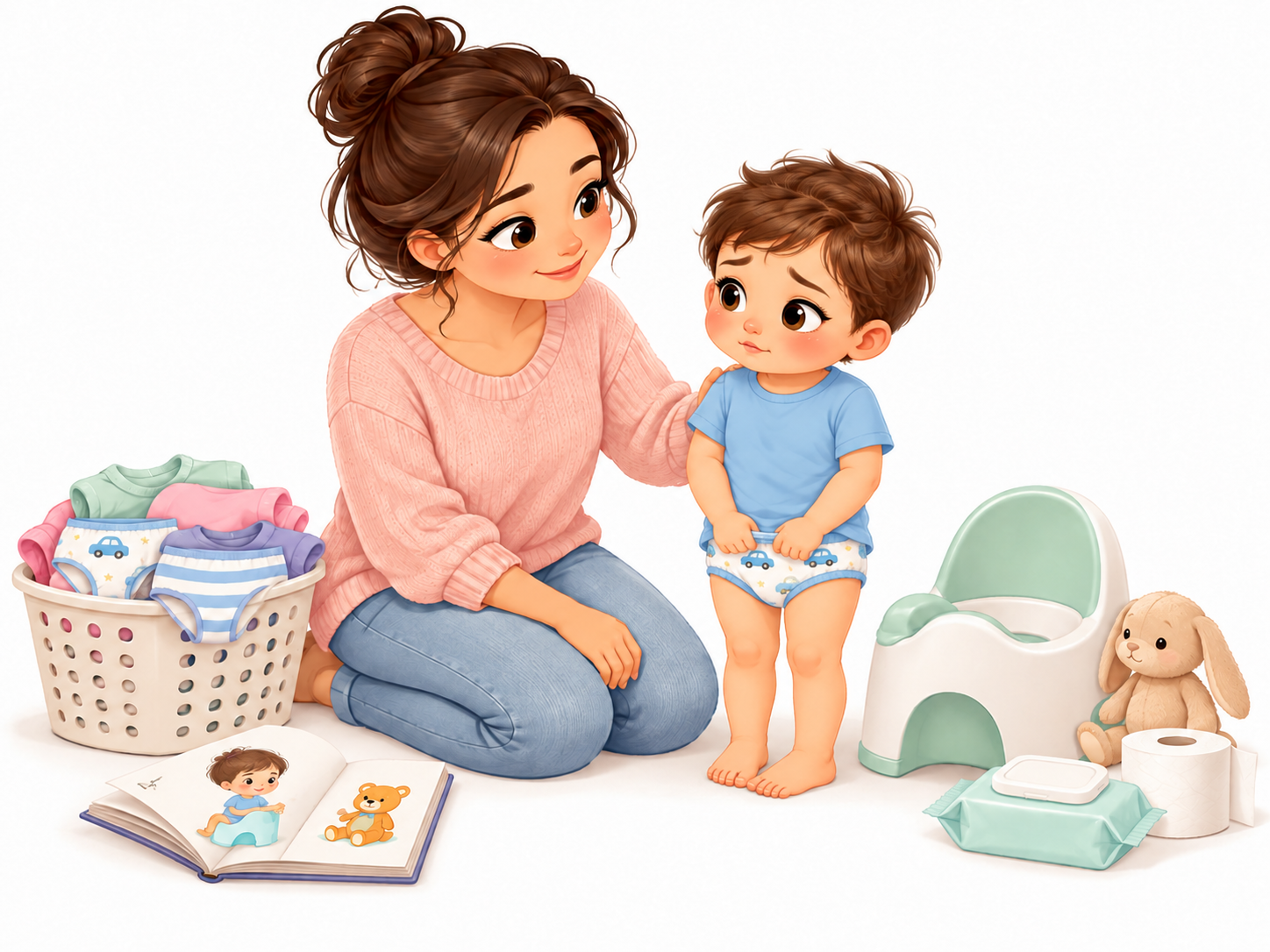
A neutral response keeps the accident from becoming emotionally bigger than it needs to be:
“Your pants are wet. Pee came out before we got to the potty. Let’s get cleaned up.”
Then move on.
Shame, punishment, teasing, or turning every accident into a long discussion can make children more anxious about the process. Potty training works best as a skill being practiced; not a test the child is expected to pass.
Avoid turning the potty into a power struggle
When parents are eager for progress, it is easy for the entire day to become centered around toileting:
“Do you have to go?”
“Are you sure?”
“Try before we leave.”
“Just sit for a minute.”
Some reminders are necessary, but constant prompting can shift responsibility away from the child's developing body awareness and create resistance.
Whenever possible, keep potty opportunities predictable rather than relentless; for example after waking, before leaving the house, before bath, or at other natural transitions.
And if a child is strongly resisting, holding urine or stool, becoming frightened of the potty, or turning every attempt into a battle, that is usually a reason to slow down and understand what is making the process difficult rather than increasing the pressure.
The goal is not the fastest possible potty training
Social media can make potty training sound like a challenge that should be completed in three days.
Some children do make rapid progress. Many do not.
A child may learn pee before poop. They may be dry at home before they are comfortable using a public bathroom. Daytime dryness may come long before nighttime dryness. Progress may also pause or temporarily move backward during illness, travel, or major transitions.
None of those patterns automatically mean something has gone wrong.
A more useful goal is to help the child gradually understand their body, participate in the routine, recover calmly from accidents, and gain independence without fear.
Ready to move from preparation to an actual plan?
Knowing the principles is one thing. The harder part is often knowing exactly what to do next: how to prepare before starting, how to introduce the potty, what to say, how often to offer it, how to handle resistance and accidents, and what to do when progress stalls.
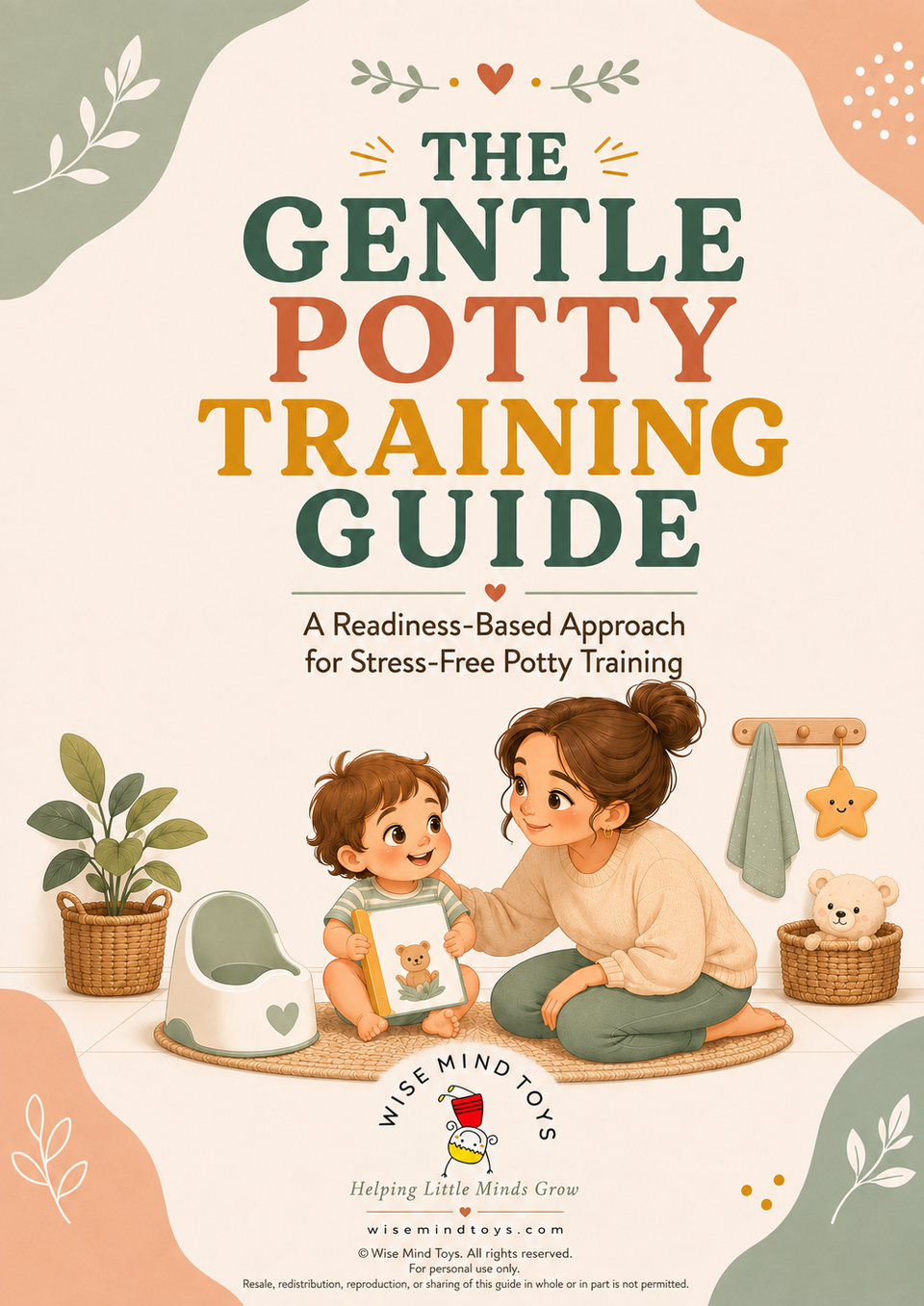
The Gentle Potty Training Guide walks through the process step by step, from readiness and preparation through the first days of practice and the challenges that can come afterward.
→ Explore the Gentle Potty Training Guide
And if you're preparing your bathroom or wondering what is actually useful; and what you can skip; you can also browse the:
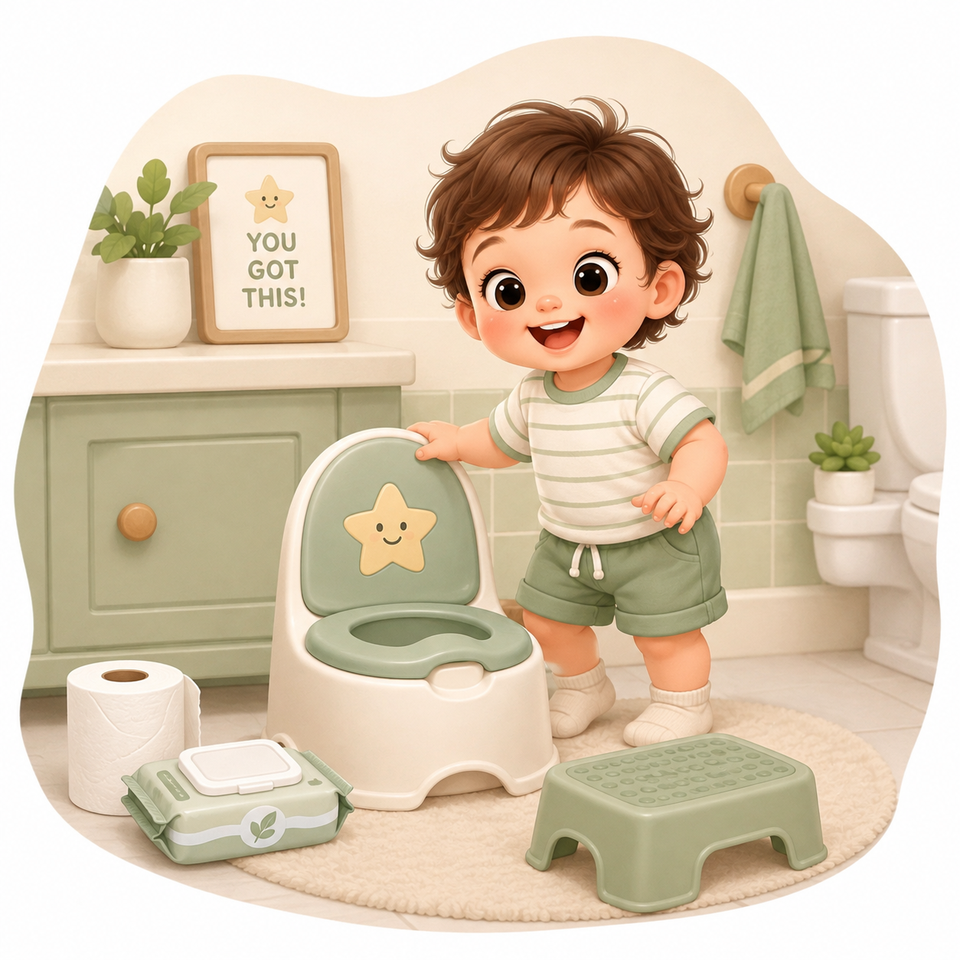
Potty training doesn't have to begin with pressure. It can begin with helping a child understand their body, know what to expect, and feel safe enough to learn.